
This article was originally written for and published by Foodservice Consultant, FCSI’s (Foodservice Consultants Society International) trade magazine, for which Marius writes a monthly column.
Hey Young World,
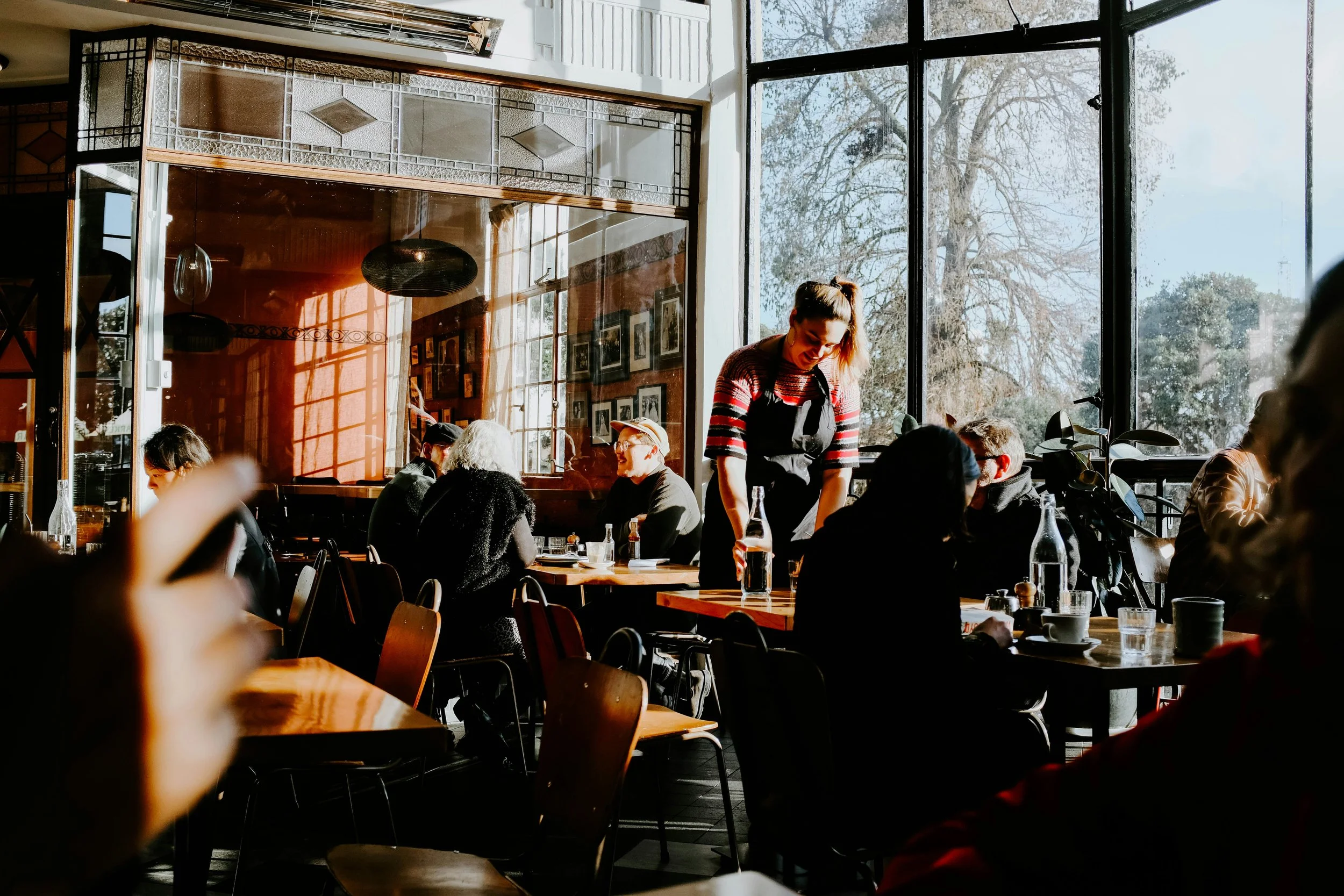
I recently wrote about the disappearing middle of hospitality: the family restaurants, casual dining concepts, and coffee shops that traditionally served as the backbone of the industry. Not budget or exclusive, but reliable, comfortable, and accessible.
The question that followed was obvious: if this middle is disappearing, how do we bring it back?
The answer is not for mid-tier hospitality to become something else. It does not need to become a discount concept competing purely on price, nor does it need to transform itself into a highly curated destination experience.
Before discussing how these businesses can adapt, however, we need to acknowledge a more uncomfortable reality. Many of these businesses are not disappearing because they failed to innovate, but because the conditions in which they operate have become increasingly difficult. Rising energy costs, increased rents in many urban areas, and inflation have left many operators with little room to absorb shocks without passing them on to customers.
This is not a problem that individual businesses can solve alone. If we believe that these places provide more than just food and drinks, that they function as third spaces and informal social infrastructure, then their survival cannot be treated purely as a commercial question. The industry needs stronger collective representation and more ability to advocate for itself. Governments, too, need to recognize that the disappearance of these places has consequences beyond the businesses themselves. A neighborhood without cafés, restaurants, and pubs is not simply a neighborhood with fewer places to eat, but a neighborhood with fewer places to connect.
Recognizing value beyond the transactional
Customers have a role as well. There is often a gap between what people say they value and what they are willing to support financially. Supporting them means returning, choosing them, and understanding the value they provide beyond the transaction itself.
At the same time, the middle cannot simply rely on nostalgia. The places that survive will be those that understand how the world around them has changed. This does not mean abandoning tradition, but instead recognizing that tradition has always evolved. A comfortable, familiar restaurant can still serve classic dishes, but accessibility needs to evolve as well. A menu that ignores vegetarian, vegan, and flexitarian guests is increasingly difficult to justify in a changing society. Offering a proper plant-based option is no longer a trend or a niche request, but part of what hospitality means. I personally cannot believe that there are still so many places that charge extra for oat milk or do not serve it at all. Making people feel welcome means understanding that different guests have different needs.
The same applies to pricing. The middle cannot compete with true budget concepts, but it also cannot become so expensive that customers start comparing it with premium experiences. The answer lies in balance: menus that offer affordable entry points alongside more premium options, allowing different customers to participate in the same space. A successful mid-tier business does not require every guest to spend the same amount. Instead of relying on higher prices, the middle should find other ways to better their financial outlook.
Finally, the middle needs to stop chasing every trend. The coffee shop landscape has shown how quickly something distinctive can become a formula when copied too often. The future of hospitality will not belong to those who imitate what is currently popular, but to those who understand their own place, their own community, and their own purpose.
After all, the middle’s greatest strength has never been novelty, but continuity: these are the places where people return, where memories accumulate, and where hospitality becomes part of everyday life.
One Love,
Marius | 1520